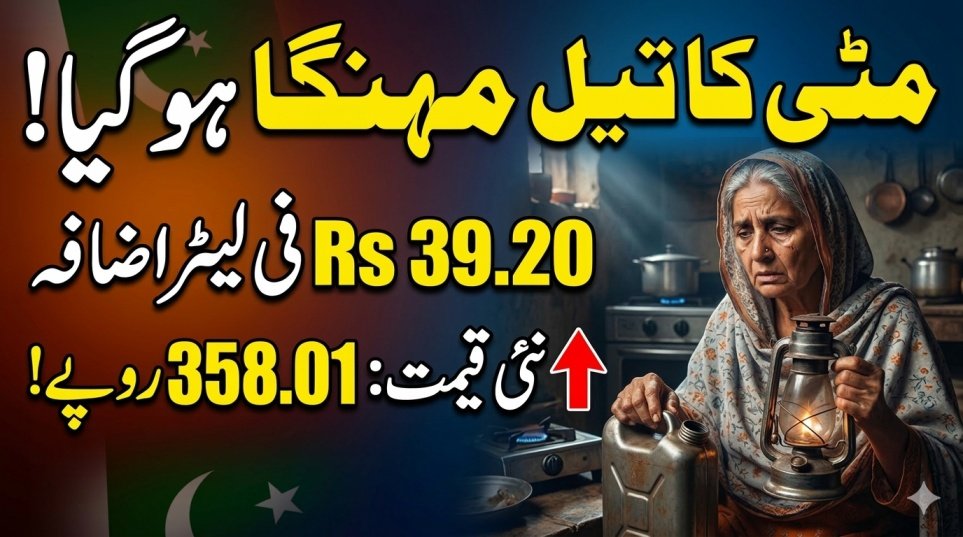
In a recent update that will affect many households, the Government of Pakistan has officially announced a significant increase in the price of kerosene oil. According to the latest notification, the price has been raised by Rs. 39.20 per liter, bringing the new official price to Rs. 358.01 per liter.
This decision was issued through the Finance Division Pakistan, which regularly reviews petroleum product prices based on international market trends and economic conditions. The revised price has now been implemented nationwide and is effective immediately.
| Feature | Details |
|---|---|
| Product Name | Kerosene Oil |
| Price Increase Amount | Rs. 39.20 per liter |
| New Official Price | Rs. 358.01 per liter |
| Estimated Old Price | Rs. 318.81 per liter |
| Issuing Authority | Government of Pakistan |
| Notification Status | Officially Issued |
| Primary Users | Rural households |
| Main Usage | Cooking, heating, lighting |

Details of the New Kerosene Oil Price Increase
The latest price adjustment has raised concerns among many citizens because kerosene oil is still widely used in rural areas of Pakistan. Fuel price changes directly impact household expenses, especially for low-income families.
Key points of the new price update include:
- Large increase: The price jumped by Rs. 39.20 per liter in one revision.
- New market rate: Consumers now pay Rs. 358.01 per liter.
- Immediate implementation: The new price took effect immediately after the announcement.
- Nationwide policy: The price applies equally across all provinces and cities.
These changes highlight the rising cost of essential fuel products in the country.

Why the Government Issued the Official Notification
Fuel prices in Pakistan are reviewed regularly by the government to align domestic rates with international market trends. If global crude oil prices rise or the Pakistani rupee weakens against the US dollar, local petroleum prices usually increase as well.
Key reasons behind this decision include:
- Changes in global crude oil prices
- Exchange rate fluctuations affecting imports
- Transportation and refinery costs
- Government petroleum policy adjustments
For official petroleum price notifications and updates, citizens can visit the official government website:
https://www.finance.gov.pk

Impact of Kerosene Oil Price Hike on Daily Life
Kerosene oil remains an important fuel for millions of people who do not have access to natural gas or reliable electricity. Because of this, the recent price hike may significantly affect daily life.
The main impacts include:
- Rural communities: Villages often rely on kerosene for cooking and lighting.
- Higher cooking expenses: Families using kerosene stoves will spend more money daily.
- Lighting problems: In areas with frequent power outages, kerosene lamps remain a primary light source.
- Winter heating costs: People in colder regions use kerosene heaters to stay warm.
These effects make kerosene price increases particularly challenging for financially vulnerable households.
Kerosene Usage and Household Impact Data
The following table highlights why kerosene oil is still widely used in Pakistan and how price increases affect daily life.
| Category | Key Information |
|---|---|
| Rural Dependence | Many rural households rely on kerosene due to lack of gas pipelines |
| Cooking Usage | Kerosene stoves are commonly used in low-income homes |
| Lighting Source | Used in lamps where electricity supply is unreliable |
| Winter Heating | Popular fuel for heaters in cold regions |
| Low-Income Support | Widely used by families with limited income |
| Distribution | Sold through local fuel shops and dealers |
| Price Sensitivity | Even small price increases affect household budgets |
| Alternative Availability | LPG and solar lighting are slowly replacing kerosene |
This information explains why kerosene remains an essential household fuel in many regions of the country.
Connection Between Oil Prices and General Inflation
When fuel prices increase, they often affect the entire economy. Although kerosene is mainly used at home, its rising price reflects broader inflation trends.
Economic impacts include:
- Higher transportation costs for moving fuel and goods.
- Increased prices of daily products in local markets.
- Reduced household savings because families spend more on fuel.
- Growing cost-of-living pressure on low-income communities.
These factors show how petroleum price adjustments influence the overall economic situation.
Alternatives to Kerosene Oil for Cooking and Heating
Due to rising prices, many households are searching for alternative energy sources to manage their expenses.
Common alternatives include:
- LPG cylinders for cooking in areas without natural gas connections.
- Firewood and biomass, often used in rural regions.
- Solar lighting systems that replace kerosene lamps in villages.
- Electric appliances for homes with reliable electricity supply.
These alternatives can help families reduce their dependence on expensive kerosene fuel.
Future Expectations for Petroleum Prices in Pakistan
The future of petroleum prices in Pakistan remains uncertain because global energy markets continue to fluctuate. If international crude oil prices remain high or the local currency weakens further, additional price adjustments may occur.
Experts believe that:
- Global oil supply and demand will continue to influence prices.
- Government policy and taxation may affect domestic fuel rates.
- Renewable energy adoption may gradually reduce dependence on traditional fuels.
For now, citizens hope that global market stability will bring relief in upcoming price reviews.
Conclusion
The Government of Pakistan has officially increased the price of kerosene oil by Rs. 39.20 per liter, setting the new rate at Rs. 358.01 per liter. The change has been confirmed through an official notification and is now effective across the country.
This price hike will mainly impact low-income families and rural households that rely heavily on kerosene for cooking, heating, and lighting. As fuel prices continue to change, many families may need to explore alternative energy options to manage their daily expenses.
FAQs:
Q1: What is the new official price of kerosene oil in Pakistan?
The new official price is Rs. 358.01 per liter.
Q2: How much has the government increased the price?
The price has increased by Rs. 39.20 per liter.
Q3: When did the new price become effective?
The revised price became effective immediately after the official announcement.
Q4: Who is most affected by the kerosene oil price increase?
Low-income households and people living in rural areas who depend on kerosene for cooking, heating, and lighting are the most affected.
Latest Updates
 Top News 2026! Get Your Free Rashan / How to Check 8070 PSER Ramzan Package Online
 Latest News 2026: Nigehban Card Payment Released / How to Check CNIC & Withdraw 10,000 Now
 Breaking News 2026: BISP 8171 Camp System Arrangements – Get Your Payment Easily in Pakistan
 Breaking News : BISP 8171 March 2026 Payment Schedule – Latest Update for Beneficiaries
  Good News: Free Laptops for Graduates / PM Youth Laptop Scheme Phase IV Update 2026
 Breaking News: Parwaz Card Last Date to Apply 2026 – Apply Before Time Runs Out!